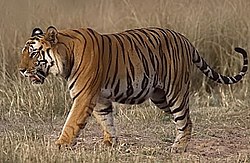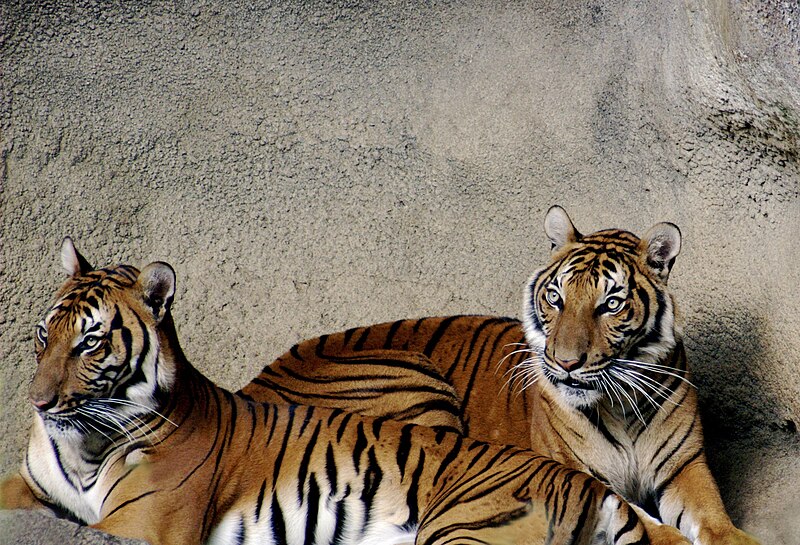


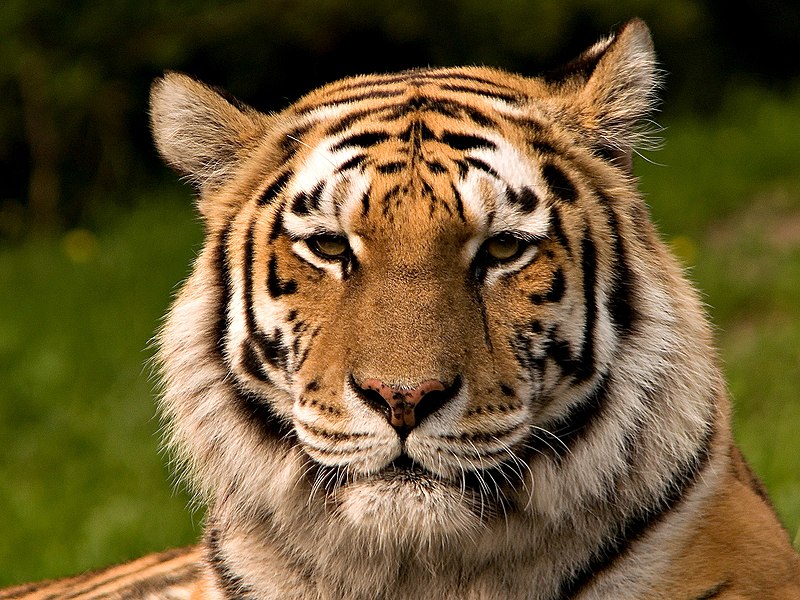



The tiger (Panthera tigris) is a member of the Felidae family; the largest and the most powerful of the four "big cats" in the genus Panthera. Native to much of eastern and southern Asia, the tiger is an apex predator and an obligate carnivore. Reaching up to 4 metres (13 ft) in total length and weighing up to 300 kilograms (660 pounds), the larger tiger subspecies are comparable in size to the biggest extinct felids. Aside from their great bulk and power, their most recognizable feature is the pattern of dark vertical stripes that overlays near-white to reddish-orange fur, with lighter underparts. The largest subspecies of tiger is the Siberian tiger.
Highly adaptable, tigers range from the Siberian taiga, to open grasslands, to tropical mangrove swamps. They are territorial and generally solitary animals, often requiring large contiguous areas of habitat that support their prey demands. This, coupled with the fact that they are endemic to some of the more densely populated places on earth, has caused significant conflicts with humans. Of the nine subspecies of modern tiger, three are extinct and the remaining six are classified as endangered, some critically so. The primary direct causes are habitat destruction and fragmentation, and hunting. Their historical range, which once reached from Mesopotamia and the Caucasus through most of South and East Asia, has been radically reduced. While all surviving species are under formal protection, poaching, habitat destruction and inbreeding depression continue to be threats.
Nonetheless, tigers are among the most recognizable and popular of the world's charismatic megafauna. They have featured prominently in ancient mythology and folklore, and continue to be depicted in modern films and literature. Tigers appear on many flags and coats of arms, as mascots for sporting teams, and as the national animal of several Asian nations.